20 Top Ideas For Choosing Termite Control Services In Jakarta
Wiki Article
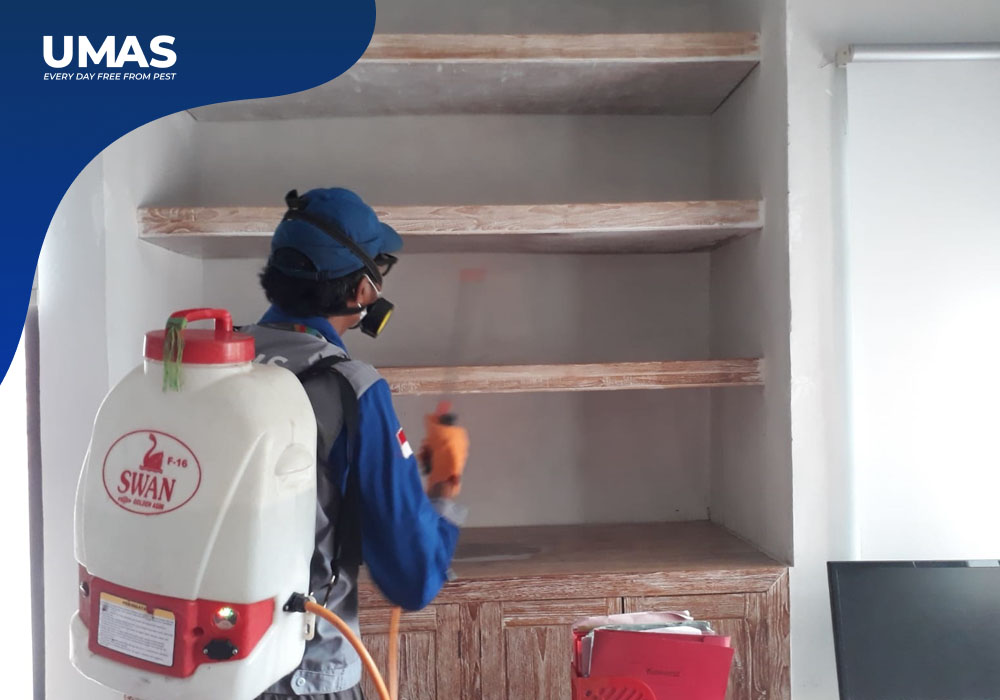
Post-Construction Termite Barriers For Jakarta
Most Jakarta homeowners believe termite barriers are something you install while the foundation is still exposed before concrete is set and the walls begin to rise. The idea is costly. The owners of the property are convinced that the only way to safeguard their slabs is to use trenching with chemicals. Terminicide is used repeatedly and deteriorates due to the alkaline ground in Jakarta as well as high humidity. This is no longer valid because retrofit barriers can be installed using the perimeter excavation method and are mechanically attached to existing foundations. Post-construction barrier systems are not less effective than security systems that were installed prior to construction. Both types of technology have distinct performance characteristics. Jakarta anti-termite products that can't offer both are locked out of the fastest-growing sector of the pest control market in urban areas.
1. Physical barriers could be retrofitted
Installing a slow-release Termiticide Membrane, stainless steel mesh or bonded sand can be done against existing foundations. The procedure involves excavation around the perimeter, soil removal, barrier placement, and mechanical fastening to the wall of the foundation. The process is expensive, disruptive and permanent. Jakarta exterminators who inform clients that there is only one option: annual liquid injections are misrepresenting the current technology.
2. Liquid Barriers Degrade; Physical Barriers Do Not
Soil-applied termiticides in Jakarta experience accelerated hydrolysis. The half-life of active ingredients decreases by a few months when temperatures are high and pH is alkaline and there's plenty of rain in wet season. Physical barriers (mesh sheets, sheets or graded stone) don't degrade. In the year 10, their performance in excluding is identical to that of year one. Chemical barriers perform actuarially worse when clients are willing and able to afford a higher cost for permanence.
3. It's not a subject of advertising, but moisture suppression has an unspoken benefit
Barriers made of polymer block termites and prevent capillary transfer of moisture from the soil to masonry. Drier foundations mean drier timber. Dryer timber is also undetectable. Termites do not attack what they cannot see. Anti-termite companies that offer physical retrofits are able to offer two interventions for one price.
4. Partial Perimeter Is Not a Barrier
Jakarta's urban densities such as party walls as well as adjacent structures and asphalt roads - make excavation of the perimeter impossible. Anti-termite services that claim to offer partial installations under the title "barriers," are misleading about the mechanics of subterranean access. Termites will walk around the ends that are wide. It is appropriate to call the process "partial perimeter intervention" with gap exclusions documented. The homeowners should be aware of the extent to which their property is not protected.
5. Bekasi Adoption Signal
Jakarta metropolitan area has already begun implementing physical retrofitting. Early adopters do not reside in Menteng, Kebayoran or Kebayoran. They reside in Bekasi. Greenfield development has led to accessible perimeters with coordinated construction sequences. Jakarta exterminators will miss the trend if they concentrate on only central Jakarta tenders. Physical barriers are adopted first in secondary cities, and then moves to the north.
6. The Architect's Specification is more important than the Substitution of Contractors
Emporio Architect (and similar firms) now specify physical barrier system in renovation documents. Within this value chain, the anti-termite contractors are those that control the requirements. Pest control companies need to shift their marketing efforts away from homeowners and towards architects as well as structural engineers. Selling retrofits to the property owner is transaction economics. Annuity economics can be a method to be specified in an architect’s master specification.
7. The curve of additive depletion favors Infused Chemist
The liquid termiticides applied to the soil surface break down and begin to accumulate from the beginning of the first day. The additives to polymer sheet barriers are infused through the matrix of the material during manufacturing. The depletion only occurs on exposed edges and follows an exponential curve of diffusion. Physical barriers come with a reasonable warranty period. Five-year warranty terms on liquid barriers are speculation.
8. Access to the Excavation Determines Fensibility
Budget isn't the only restriction in the post-construction barrier construction. Access to the bucket. Mini-excavators require approximately sixty centimeters of clear working space adjacent to the foundation. Geometrically, properties that have no-lot construction, shared driveways or hardscapes installed near to the wall won't be eligible. Anti-termite companies must conduct access audits prior to quoting.
9. ESG Reporting generates commercial demand
Indonesian businesses that are committed to sustainability and multinational tenants who want to keep track of their carbon emissions are able to do it today. Broadcast spraying of liquid termiticides has been documented as a CO2 equivalent emission. Physical barrier installation--one-time excavation, mechanical fastening, zero recurrent chemical application--qualifies as emissions reduction. Jakarta exterminators who serve corporate clients need to provide carbon equivalent disclosure or lose bids to competitors that do.
10. Retrofit Barriers Have Different Warranties
The barrier plane is protected against termite invasion. This warranty is not applicable for post-construction barriers since they don't fully enclose a structure, but only the accessible part of its perimeter. The proper warranty language is "exclusion of zones that are treated" not "protection of entire structure." Homeowners who believe that they bought the complete protection have been misled. Documenting precisely what was installed, and what is vulnerable allows exterminators to settle claims disputes faster and retain clients.
Conclusion
Three trends are converging in Jakarta The documented decline rate of chemical termiticides that are applied to soil employed in tropical urban environments architects' specifications for permanent physical barriers, and corporations' demand for pest control techniques compatible with carbon accounting frameworks. Anti-termite services that continue framing post-construction protection as chemical trenching aren't safeguarding market share, they are protecting the risk of obsolescence. The equipment required--mini-excavators, core drills, mechanical fasteners--is capital-intensive but one-time. The required training--soil analysis access auditing, access auditing and warranty documentationis and is transferable. The barrier era came into Bekasi. Within a matter of 24 months, it will reach Jakarta. Early adopters will gain two years of market advantage over those who wait to see if clients demand it. There is no question about whether or not to retrofit barriers. The issue is not whether or not to retrofit. Check out the best jasa basmi rayap for blog examples including cara membasmi rayap di lemari, harga anti rayap, cara membasmi rayap kayu, jasa anti rayap surabaya, anti hama, cara membasmi rayap kayu, cara basmi rayap kayu, cara basmi rayap kayu, pembasmi hama, pembasmi rayap and more.
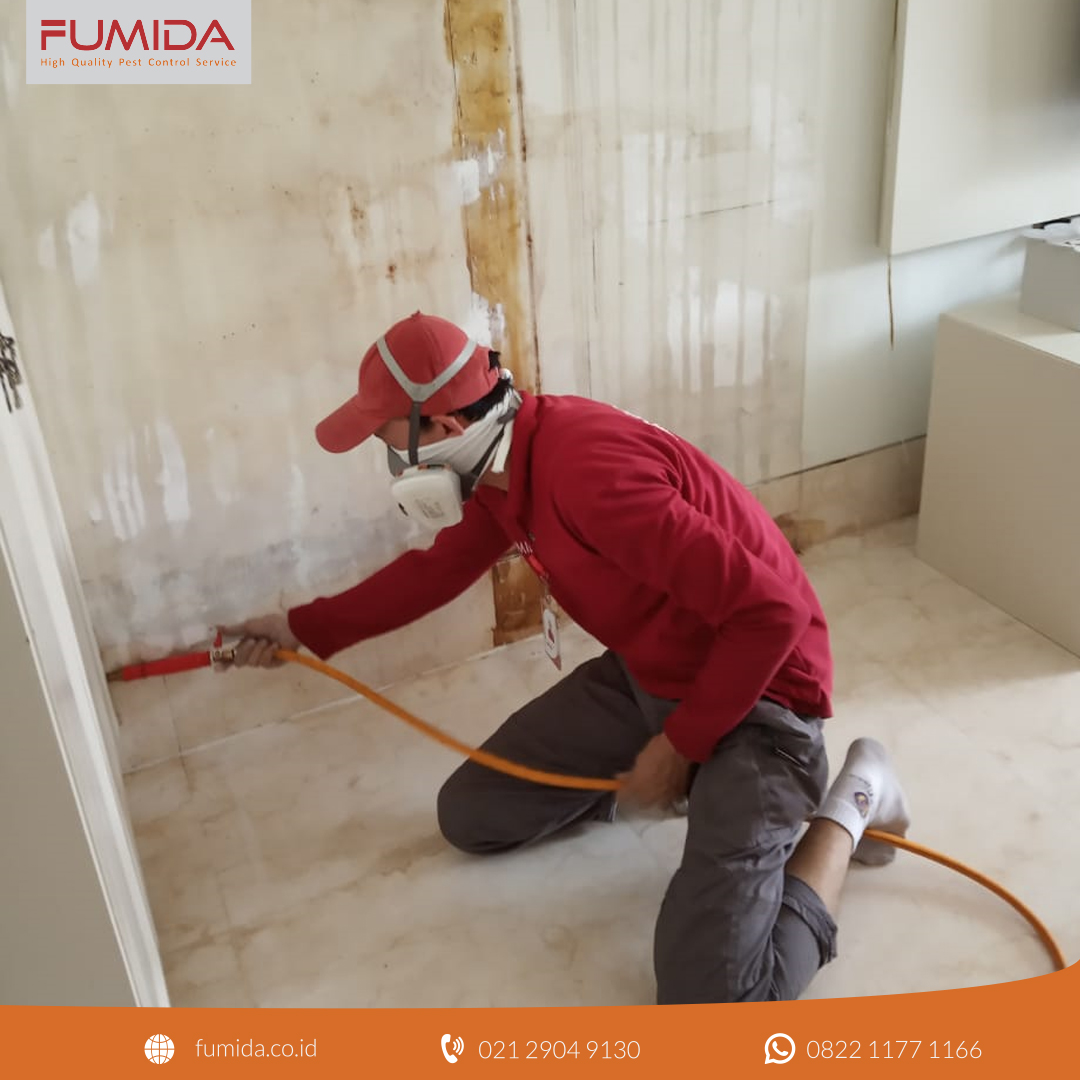
Baiting Above Ground For Asian Subterraneans At Jakarta
Jakarta people believe that termite baiting is done by placing bait stations made of plastic in their gardens, which are then checked periodically by a technician who looks inside and smiles. This is a form of perimeter control, not colony extermination. Baiting aboveground is a totally different area of expertise. The station isn't buried; it is locked directly onto a mud tube that is active or placed against the excavated damages. The termites do not need to locate the bait; the bait is inserted into their commuter highway. For Asian subterranean species--Coptotermes gestroi, Coptotermes curvignathus, Microtermes insperatus--above-ground delivery bypasses every behavioral barrier that makes perimeter baiting slow and uncertain. Jakarta anti-termite services that do not have above-ground stations on their vehicles are geared for inspection, not treatment.
1. Above-Ground Stations Must Be Infested Actively
Technicians install stations and then look for termites. Above-ground baiting works with confirmation. The station cannot be deployed until mud tubes are found or timber that has been damaged. It is not a requirement however it is a test of efficiency. The plastic won't be buried beneath sterile earth. The technician doesn't have to supervise stations that do not fall victim to a slash.
2. The Mud Tube is now a delivery infrastructure
Above-ground stations can be designed to integrate with existing termite-based construction. The base of the station is an enclosed chamber over the mud tube. Termites who pass through the nest and feeding area go through the station. They then encounter the bait matrix, eat it, and then continue their way. The tube is not damaged. The commuter pattern doesn't be disrupted. The colony uses its own infrastructure to poison itself.
3. Tests for Palatability differ in Above-Ground Delivery
The colony has already examined the wood for its ability to eat. The location of the feeding site has been confirmed. Above-ground bait matrices should only be acceptable, not necessarily attractive. This reduces the restrictions on formulation and permits the inclusion of poisons with slower acting properties that would have been rejected in the event of competition with untreated wood. Jakarta exterminators must carry multiple bait formulations, and decide on the feeding preferences observed in the specific area of infestation.
4. Recruitment Multiplier through Self-Seeding
The feeding process begins when termites live are transported from the wood that is infested to the station's chamber above the ground. The introduced termites have already adjusted to the local environment and the foraging pattern. They begin eating bait and recruiting nestmates by trophallaxis. This single action increases the rate of delivery of toxicants by about 30 percent. The biological assets are lost when termites are destroyed by exterminators by scraping them off wood damaged.
5. Coptotermes gestroi Responds Quickly Above Ground
Coptotermes Gestroi, a species of Asian subterranean termsites has been found to have a very high rate of feeding throughout the all year. Monitoring stations above ground for active infestations typically exhibit signs of feeding within 48 hours. Consumption of bait that is quantifiable is evident within one week. The timeframes for removing colonies are compressed from months to a few weeks. Companies that offer an average of six months for baiting above ground either employ poor matrices or are unable to transfer the recruiting termites.
6. The placement of macro- and micro-terms differs
The termites that cause fungus (Microtermes, Macrotermes, and Macrotermes gilvus) are not able to construct mud tubes as often as Coptotermes. They hunt above the ground in a more dispersed way, and the feeding areas of these termites can be concealed within wood. They require the excavation of the damaged zone, direct insertion into the feeder's cavity and a meticulous sealing. Station geometry is different. Jakarta exterminators that attempt Coptotermes protocols on Microtermes infestations will observe poor uptake.
7. Moisture Conditioning Is Non-Negotiable
Water activity levels are utilized to manufacture above-ground bait matrices. Jakarta's high humidity exchanges water with the surrounding environment. Bait placed in a toolbox on a vehicle for several weeks may dehydrate. Bait removed from its packaging sealed, and left at the location to absorb atmospheric water, may spoil. Exterminators should condition bait cartridges before installing, adding measured water for the best moisture content. They must also safeguard unopened inventory from Jakarta’s 24/7 humidity.
8. Inspection Frequency Compresses
Programmes of perimeter baiting operate in accordance with inspection cycles which are either quarterly or biennial. Aboveground baiting is conducted on a week-to-week basis. Infestations that are active consume bait quickly and depleted cartridges should be replaced within days, not months. Colony devastation is confirmed after the feeding ceases and the mud tubes begin to dry up. Services that schedule above-ground bait checks on their regular monitors of the perimeter will see reduction in bait levels, assuming that treatment is in progress, and fail to observe the colony recovery window.
9. Warranty Requires Different Underwriting
The price of the warranty for perimeter baiting is based on the frequency of inspection and station density. Above-ground warranty prices are based on the species' identification and infestation extent. A single Coptotermes enterosus colony that passes through the threshold in a door is warrantable for standard rates. Microtermes infestations spread over an entire floor require a different approach to risk. Jakarta antitermite companies that charge the same price for both scenarios are misestimating the risk.
10. Above-Ground Ground Is Not Just Its Therapeutic Value, but also Diagnostic
The location of the tube of mud, the number of termites' castings in the stations, and the frequency at which bait consumption occurs offer information about the colony's health and range of foraging. Consumption is rapid and indicative of a large colony under resource stress. Abandonment and consumption could indicate colony elimination. Mud tubes that darken indicate less traffic. When trained to read the signals, the exterminators can modify treatment parameters in real time. Exterminators who simply change cartridges, and then leave, do not take advantage of the most efficient and effective intervention based on data to manage termite infestations.
Conclusion
Above-ground detection of Asian subterraneans performed by inspection firms is not a supplementary service. This intervention is what distinguishes colony removal specialists from inspection companies. Perimeter baiting monitors. Above-ground baiting treats. Perimeter baiting is waiting to be discovered. Engineers come across above-ground baiting. Perimeter baiting results in quarterly bills for service. Above-ground colony elimination is achieved through above-ground baiting. This leads to warranty renewals and the complete elimination of colonies. Jakarta anti-termite businesses that stall the introduction of above-ground protocols typically cite equipment price and training requirements for technicians, and/or the inconvenience of having to carry multiple baiting matrices. These aren't obstacles but rather investment. The expense of equipment is fully recouped in the first three above-ground deployments. The training investment pays dividends, as technicians progress from generalists applicators to specialists diagnosing specialists. The various bait matrices differentiate premium service providers from commodity exterminators. Residents with active termite colonies don't want their perimeter being monitored. They do not want to see the termite colony still alive. Above-ground baiting will get you there the fastest. Jakarta exterminators are wasting time scraping tubes and dumping dirt without the above-ground stations. View the top rated anti rayap for site advice including rayap kecil, pengendalian hama, bahan lemari anti rayap, pembasmi rayap kayu, cara basmi rayap, anti rayap kayu, rayap lemari, pintu anti rayap, cara basmi rayap, anti hama and more.